
Let me tell you about the day my gaming session turned into a frontline in the war for the soul of acting. I was just another grunt in the Fortnite trenches, dodging bullets and building ramps, when the sky split open. Not with a meteor shower or a new weapon drop, but with the ominous, mechanized breathing of Darth Vader. This wasn’t your granddad’s Sith Lord, the one voiced by the legendary James Earl Jones. No, this was something else—a digital phantom, a voice crafted from ones and zeros that felt as hollow as a droid’s promise. I defeated him, recruited his pixelated form to my squad, and tried to chat. His responses were uncanny, fluent, yet devoid of the gravelly warmth that once struck fear into a galaxy. It was like conversing with a perfect, shimmering hologram that could never cast a real shadow. Little did I know, my virtual skirmish had just lobbed a thermal detonator into the heart of Hollywood.
The Digital Sith in Our Midst: A Voice Cloned from the Ether
This new Vader, exclusive to the 2026 Galactic Battle Season, is a technological marvel and an ethical black hole. Beating him in Battle Royale lets you add him to your team, and he comes equipped with conversational AI. You can ask him about the Force, discuss tactics, or just listen to him breathe. But here’s the rub: the iconic voice isn’t James Earl Jones performing in a booth. It’s an AI replica, built from the rights he sold before retiring. Epic Games had the legal blessing from Jones’s estate, a fact they were quick to confirm. To them, it was a solved equation: permission granted, asset deployed. But to the actors’ union, SAG-AFTRA, it was a declaration of war issued without a single negotiation.
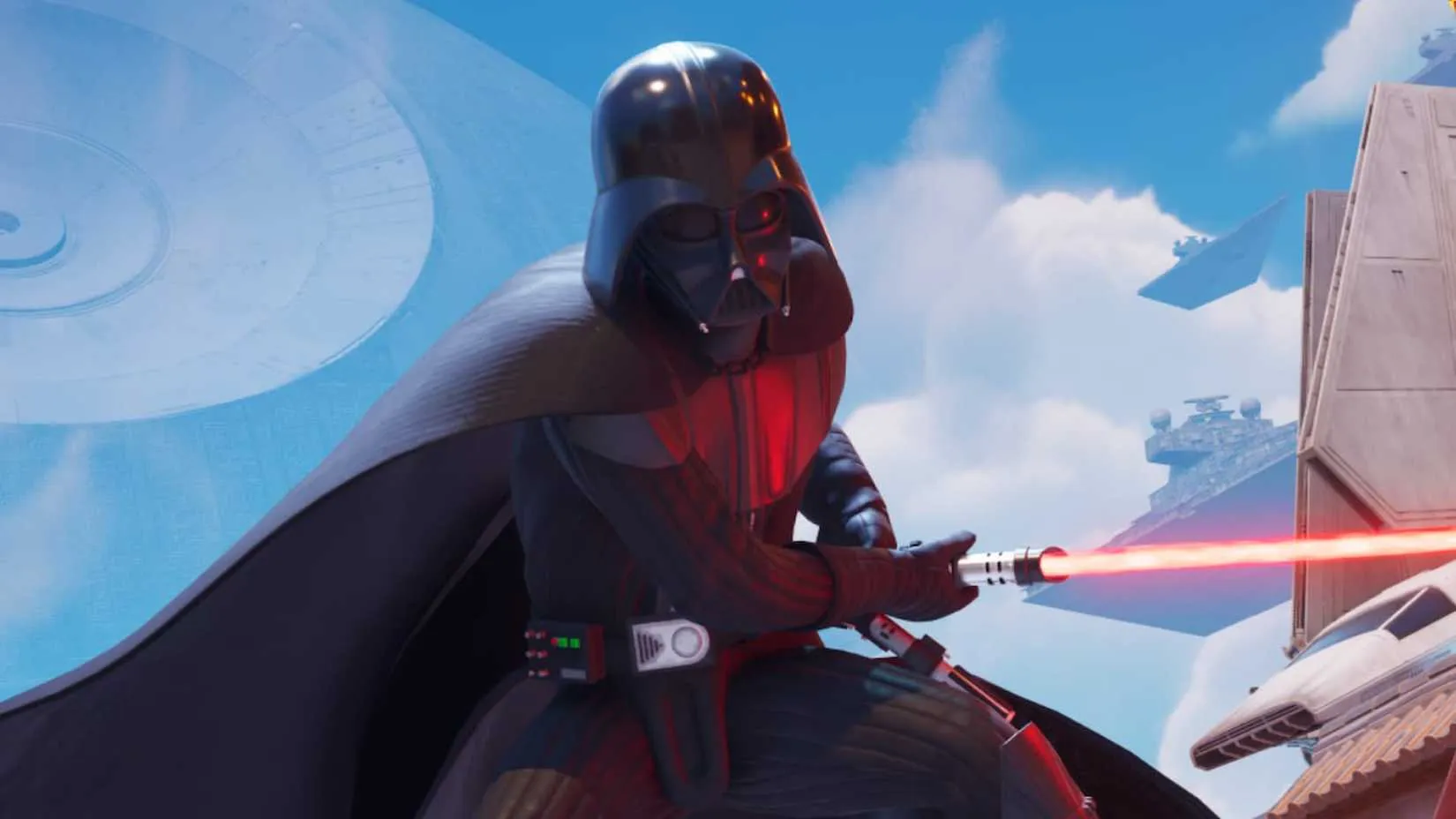
Llama Productions/Epic Games committed the ultimate galactic faux pas: they used a computerized voice without notifying the union. In their eyes, they’d purchased a star map and followed it precisely. In SAG-AFTRA’s eyes, they’d bypassed an entire planet of working actors to mine a synthetic resource. The union has filed an unfair labor practice charge, arguing that a potential role for a living, breathing performer was erased by a line of code. This AI Vader isn’t just a boss character; he’s a precedent, a ghost in the machine whispering that maybe flesh-and-blood talent is becoming optional.
The Legal Trenches: Permission vs. Protocol
So, we have a colossal standoff. On one side, a gaming giant with a signed contract. On the other, a powerful union protecting its members’ livelihoods. Epic’s defense is simple: “We have the rights.” SAG-AFTRA’s retort is sharper: “You didn’t follow the rules.” The union isn’t (currently) disputing the legality of using Jones’s AI voice clone. They’re hammering Epic for failing to bargain or even notify them about replacing a human job with AI. It’s the difference between owning a lightsaber crystal and ignoring all the Jedi Council protocols on how to use it.
The situation is as tangled as a nest of gundarks. The AI Vader appearance is reportedly temporary, a limited-time event. But the implications are permanent. How do you “resolve” a conflict when the offending digital entity might simply vanish from the game servers tomorrow? The damage, however, is done. This case has become a rallying cry, a stark example of AI’s creeping reach into creative spaces. For performers, it’s a chilling vision of a future where their greatest performances are not their legacy, but their replacement’s blueprint.
The Ripple Effect: What My Victory Royale Really Cost
As a player, I got a cool NPC teammate. As a member of the gaming and creative community, I witnessed the opening salvo in a much bigger battle. This isn’t just about one Sith Lord in a battle royale. This is about the future of all voice acting, and by extension, all performance in interactive media.
-
For Game Developers: The path just got rockier. Want to use an AI voice for a major character? Be prepared for legal and union scrutiny that could make the process more arduous than navigating an asteroid field. The “easier and cheaper” calculus now has a massive potential bargaining and litigation cost added to the equation.
-
For Actors: The fear is real. If a titan like Darth Vader can be AI-cloned with (legal) impunity, what’s stopping studios from creating synthetic versions of lesser-known but equally talented voice actors? Their careers could be replicated and archived without their ongoing consent or compensation.
-
For Us, the Players: We face a subtle but profound shift. We risk losing the imperfect, breathy, human moments that give characters soul. An AI can mimic cadence and tone, but can it replicate the subtle crack of emotion in a line delivered after a long recording session? That unique spark is as irreplaceable as the original Kyber crystal in a lightsaber. Moving forward, we might be interacting with characters that feel as authentic and emotionally resonant as a museum diorama—beautifully constructed, but fundamentally static and empty.
My encounter with the AI Vader was a victory on screen. But off-screen, it feels like we all lost a small piece of something. The resolution between Epic and SAG-AFTRA is still pending, a tense negotiation happening in conference rooms far from the battle bus. But one thing is clear: the genie is out of the bottle, and it’s wearing a helmet and a cape. The fight for who controls our stories, and the voices that tell them, has just leveled up. And this time, it’s not just for Victory Royale—it’s for the very heart of creativity itself. The digital frontier just got a lot more complicated, and the echoes of this conflict will be heard in every game studio and recording booth for years to come.