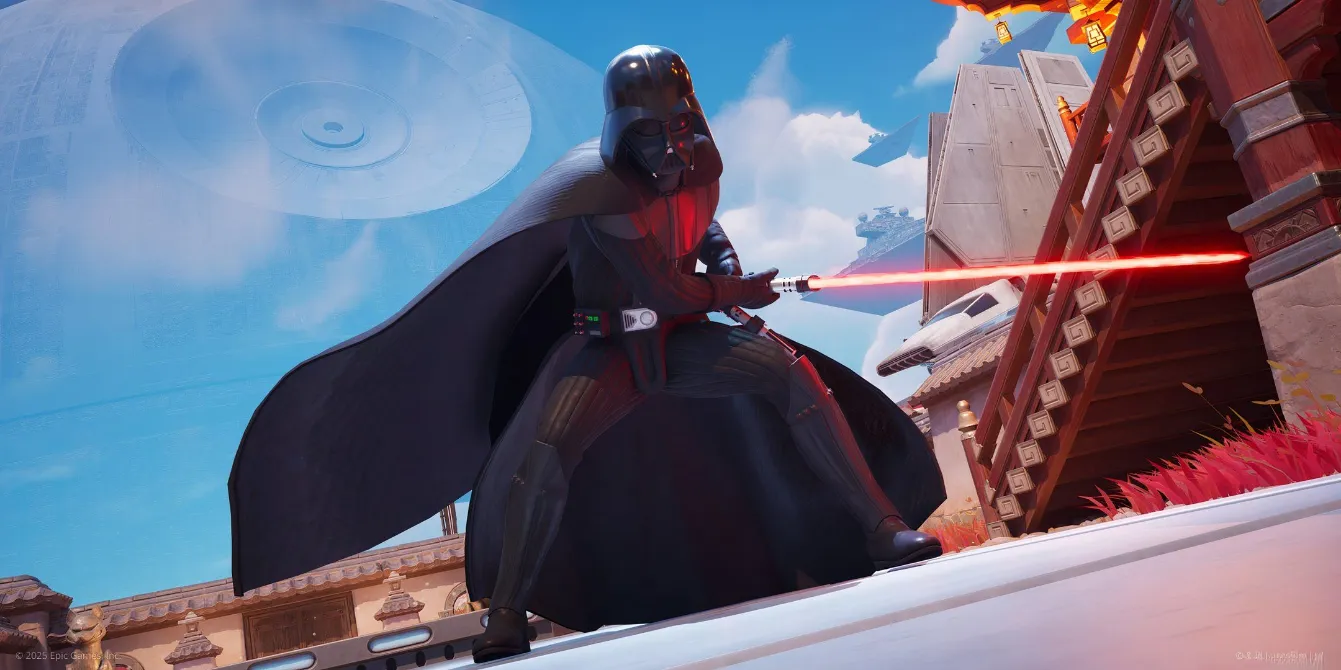
In the wild west of 2026’s gaming industry, where technology gallops ahead faster than a Wookiee on caffeine, a new kind of showdown has erupted. SAG-AFTRA, the powerful union representing screen actors, has drawn its legal blaster and fired an unfair labor practice charge straight at the heart of Fortnite. The target? The game’s use of an AI-generated voice that mimics the iconic, deep-bellied tones of the late James Earl Jones as Star Wars‘ Darth Vader. Talk about a disturbance in the Force, folks. This ain’t your grandpappy’s labor dispute; it’s a high-stakes battle over the very soul—or should we say, voice—of performance in the digital age.
The Charge: A Failure to Bargain in Good Faith
According to the official filing, which reads with more drama than a Shakespearean tragedy, SAG-AFTRA alleges that Fortnite‘s signatory company, Llama Productions, committed a major faux pas. They “chose to replace the work of human performers with A.I. technology” and did so “without providing any notice of their intent to do this and without bargaining with us over appropriate terms.” Ouch. That’s like building a Death Star without telling the architects’ union—a big no-no. The union’s gripe isn’t just philosophical; it’s contractual. They claim the company made unilateral changes to employment terms, which is basically labor law’s version of a mic drop without permission.
Here’s the kicker: the James Earl Jones estate did grant permission for the use of his voice. So, legally, Epic Games might think they’re in the clear. But SAG-AFTRA is arguing, “Hold your Bantha, buddy!” The union’s mandate is to protect its members—including those talented voice actors who have spent years perfecting the “iconic rhythm and tone” of Vader in past video games like Star Wars Jedi: Survivor. By using AI to replicate Jones, the game effectively sidelined those very performers.
The Bigger Picture: AI and the Ongoing Video Game Strike
This Vader-voiced debacle didn’t happen in a vacuum. It’s smack-dab in the middle of SAG-AFTRA’s video game strike, which has been raging since July 2024. 🤯 Yeah, you read that right—as of 2026, the strike is still a thing. While negotiations have chipped away at other issues, protections against AI remain the primary sticking points. The union isn’t some Luddite gang trying to smash the machinery; they’re pragmatists. Their position is clear: they’re willing to adopt the quickly evolving technology as long as human workers are compensated fairly for their voices, which are often the secret sauce used to train these very algorithms.
The core fear is existential: AI-generated voices threaten to put voice actors out of work faster than you can say “Roger Roger.” This Fortnite case is seen as a potential precedent—a slippery slope where iconic performances are mined from the past, leaving current actors high and dry.
A Grim Tradition: Star Wars and Digital Puppetry
Here’s where it gets meta, and a little creepy. SAG-AFTRA’s filing highlights a sad tradition in the Star Wars universe. Using Jones’ AI voice for an interactive Vader is described as a “grim sort of puppetry.” And they’ve got a point. Remember the digitally resurrected faces in Rogue One? The late Peter Cushing’s Grand Moff Tarkin and a young Princess Leia, crafted from Carrie Fisher’s likeness, gave many fans the heebie-jeebies. It was impressive tech, sure, but it felt… off. The same thing happened with a de-aged Mark Hamill in The Mandalorian, even though the actor underneath already looked the part.
Star Wars seems to have this odd, almost obsessive desire to enshrine characters exactly as they first appeared, freezing them in carbonite, digitally speaking. This is despite fantastic performances from new actors, like Alden Ehrenreich’s more-than-serviceable turn as Han Solo. James Earl Jones’ Vader is legendary, but the union argues that in an interactive medium like Fortnite, casting should consider living, breathing performers.
The Union’s Stance: Fair Compensation, Not Flat-Out Rejection
Let’s be crystal clear: SAG-AFTRA isn’t launching a jihad against all AI. Their position is nuanced. They’re demanding a seat at the table—a chance to bargain over how AI is implemented. The key demands likely include:
-
Transparency & Notice: Companies must inform the union before replacing human work with AI.
-
Bargaining for Terms: Negotiating fair compensation for actors when their past performances are used to train AI, or when AI is used to replicate a role.
-
Protection for Incumbent Performers: Ensuring actors who have historically voiced a character (like previous Vader performers in games) are given consideration for new projects.
In their own words, the union “must protect our right to bargain terms and conditions around uses of voice that replace the work of our members.” It’s about consent, credit, and cash.
The Bottom Line: What’s at Stake for Gamers and Actors Alike?
For gamers, this might seem like inside baseball. Who cares if Vader sounds 99.9% like James Earl Jones if the estate said it was okay? But the implications are huge. If AI can freely replicate any iconic performance without consequence, what incentive is there to hire new talent? The rich tapestry of voices in gaming could become an echo chamber of digital ghosts.
For voice actors, it’s a fight for their livelihoods. The Fortnite case is a test balloon. If Epic Games and Llama Productions get away with this without bargaining, it sets a dangerous template. Every studio with a deep catalog of iconic voices might be tempted to follow suit.
The saga continues. As of 2026, the strike drags on, and this ULP charge is a major salvo. Will the force be with the actors, or will the dark side of unfettered automation prevail? Only time, and likely a lot of legal wrangling, will tell. One thing’s for sure: the future of performance in video games is being written right now, and it’s a script full of more tension than the climax of Empire Strikes Back. May fair negotiations be with them.